

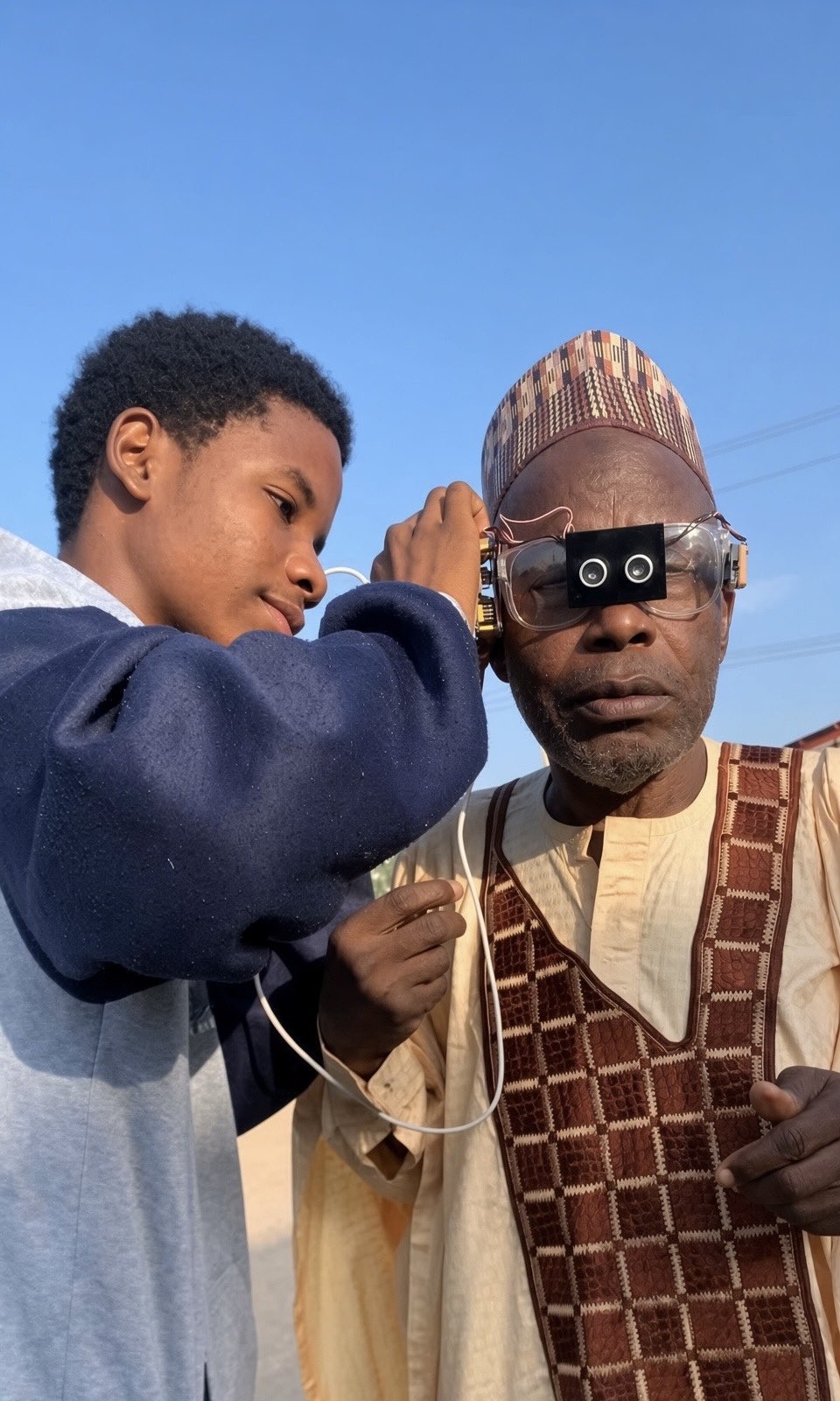
A 20-year-old inventor from Kano has taken his AI-powered smart glasses into a real-world trial, fitting them on a visually impaired man and recording the user’s immediate reaction.
Khalifa Aminu, who posts under the handle @inventorkhalifa (on X – formerly Twitter) shared photos and a short video of the test on Saturday. In the clip, the glasses which is a prototype fitted with sensors, wiring and a connected power unit are carefully placed on the face of an older man wearing traditional attire. After wearing them, the man appears moved, gesturing with open hands and speaking in a tone that Aminu described as pure amazement.
“I have launched the actual test of this AI Glass that I built to help blind people and people with visual impairments,” Aminu wrote. “I started testing it directly on the face of a person with a visual impairment to see how it would work in real life. And what amazed me the most is that after the blind person wore the glass, he said that for him, it was amazing.”
Aminu has been developing the device for several years. Unlike typical consumer smart glasses, his version is designed specifically as an assistive tool. It uses sensors to detect obstacles ahead, alerts the wearer through sound or vibration, incorporates GPS to track the user’s location, and can notify a caregiver via WhatsApp or email if the person appears lost. He has also been adding AI elements so the glasses can better analyse surroundings and provide more useful feedback.
The young inventor, who has largely taught himself electronics and built earlier versions with locally available parts, said the project is nearing the stage he has long aimed for. He expressed gratitude for public support so far and made clear he is looking for technology companies and organisations willing to help move the glasses from prototype to full production.
“I’m grateful to everyone who has supported me so far. But my dream and vision go far beyond this. I want to use technology to make a real difference in people’s lives and help our society,” he posted. “I believe this project deserves to reach the world.”
Aminu first gained wider attention in 2024 with an earlier version of the sensory glasses. Nigeria’s National Commission for Persons with Disabilities showed interest at the time, and local groups provided him with tools, a laptop and workspace support. The latest test marks a clear step forward as he continues refining the design.
The video of the trial has already drawn tens of thousands of views, with many online users praising the young inventor’s persistence and calling for greater publicity and backing for the work.