

ADC chieftain says Obi’s description of Makinde as qualified raises questions about why he is pursuing his own presidential bid
ABUJA — A fresh political debate has emerged ahead of Nigeria’s 2027 presidential election after Kenneth Okonkwo, a spokesperson for the African Democratic Congress (ADC) presidential candidate Atiku Abubakar, questioned Peter Obi’s position on the presidential ambition of Oyo State Governor, Seyi Makinde.
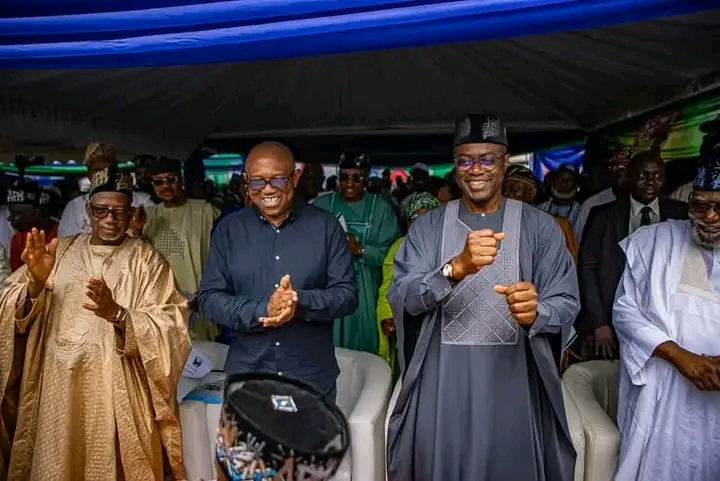
Okonkwo raised the issue following Obi’s attendance at the inauguration of Makinde’s presidential campaign office in Abuja. Makinde is seeking the presidency on the platform of the Allied Peoples Movement (APM), while Obi is running under the Nigeria Democratic Congress (NDC), according to reports on the development.
Obi, who attended the event, reportedly described Makinde as qualified to contest for the presidency. His presence at the campaign office launch subsequently generated speculation about possible cooperation or realignment among opposition figures ahead of the 2027 election.
However, speaking during an interview on ARISE TV’s Daybreak, Okonkwo questioned whether Obi’s attendance should be interpreted as a political alliance. He argued that appearing at another politician’s event did not necessarily amount to an agreement to support that politician’s presidential ambition.
Okonkwo’s central argument was that if Obi genuinely considers Makinde capable of becoming president, he should explain why he is not backing the Oyo governor rather than pursuing his own presidential ambition.
He also questioned why opposition politicians who previously explored cooperation had not been able to settle on a common candidate before moving into the electoral phase.
The ADC chieftain referenced Obi’s earlier involvement with the opposition coalition, arguing that the former Anambra governor had previously been associated with the ADC before eventually leaving the arrangement ahead of its presidential primary.
The exchange comes against the backdrop of continued political manoeuvring among opposition politicians as parties position themselves for the 2027 presidential contest.
Makinde and Obi have previously held political discussions, including a closed-door meeting in Ibadan in April 2026, when both were involved in discussions surrounding possible opposition cooperation.
Both politicians have since proceeded with separate presidential ambitions. Makinde secured the presidential ticket of the APM, while Obi emerged as the presidential candidate of the NDC.
The latest development therefore highlights one of the central questions likely to dominate the opposition camp before the election: whether competing presidential hopefuls will eventually unite behind one candidate or maintain separate campaigns.
For now, Okonkwo’s intervention has added another layer to the debate, challenging Obi to reconcile his public assessment of Makinde’s qualifications with his decision to continue his own presidential campaign.
The 2027 contest is increasingly taking shape around competing personalities, alliances and attempts to consolidate opposition votes, making the question of possible cooperation among major opposition figures a significant issue ahead of the election.