

Motorists to Use Second Niger Bridge as Federal Government Moves to Address Deterioration, Vandalism
The Federal Government has announced the temporary closure of the First Niger Bridge in Onitsha, Anambra State, as part of emergency maintenance and rehabilitation works aimed at restoring the ageing infrastructure to a safe and motorable condition.
The closure is scheduled to begin on Monday, September 7, 2026, and is expected to last until Monday, September 21, 2026, according to the Federal Ministry of Works.
The development was disclosed by the Acting Federal Controller of Works in Anambra State, Timothy Emenike, who said the intervention had become necessary because of deterioration along the bridge’s carriageway and damage to some of its structural components.
Reports from multiple Nigerian media organisations indicate that the affected components include portions of the expansion-joint steelwork as well as nuts, bolts and other fittings around sections of the bridge. Some of the damage has been attributed to vandalism and the removal of metal components.
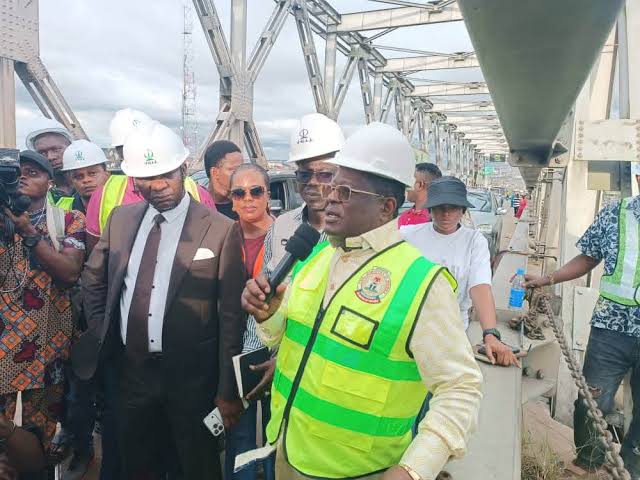
The decision followed an inspection of the bridge by the Minister of Works, David Umahi, during which concerns were raised about its condition. Following the assessment, the ministry directed the contractor handling the relevant section of the Onitsha-Enugu highway, SKECC, to commence emergency intervention works.
The First Niger Bridge is a major transportation link between Onitsha in Anambra State and Asaba in Delta State, carrying substantial traffic between the South-East and South-South regions and serving as an important route for commercial and passenger movement.
Second Niger Bridge to Serve as Alternative
With the First Niger Bridge scheduled for full closure, motorists have been advised to use the Second Niger Bridge through the Obosi-Asaba route throughout the maintenance period.
The Federal Ministry of Works said appropriate diversion measures, including road signs, safety barriers and traffic-control personnel, would be deployed to guide motorists and protect both road users and construction workers.
Traffic authorities have also urged motorists to obey temporary road signs, follow diversion instructions and exercise caution around construction areas. Motorists are expected to experience increased travel times as traffic is redirected to the alternative corridor.
Repairs to Be Undertaken Round the Clock
The emergency intervention is expected to address the deteriorated sections of the carriageway and damaged bridge components. Other reported aspects of the rehabilitation include resurfacing works and additional safety-related improvements.
The ministry has indicated that construction activities will be undertaken continuously to facilitate the speedy completion of the intervention and reduce the period of disruption to motorists and businesses dependent on the busy transport corridor.
The authorities have appealed to motorists, transport operators, residents and other road users to cooperate with traffic-management officials during the closure.
The temporary shutdown, officials said, is necessary to enable the emergency works to be carried out safely and efficiently, with the ultimate objective of returning the First Niger Bridge to a safer and more reliable condition.
Motorists travelling between the South-East and destinations across the Niger, particularly Asaba and other parts of Delta State, are therefore advised to plan their journeys ahead and make use of the Second Niger Bridge until the First Niger Bridge is reopened.
If the scheduled timeline is maintained, normal vehicular movement on the First Niger Bridge is expected to resume on Monday, September 21, 2026.