

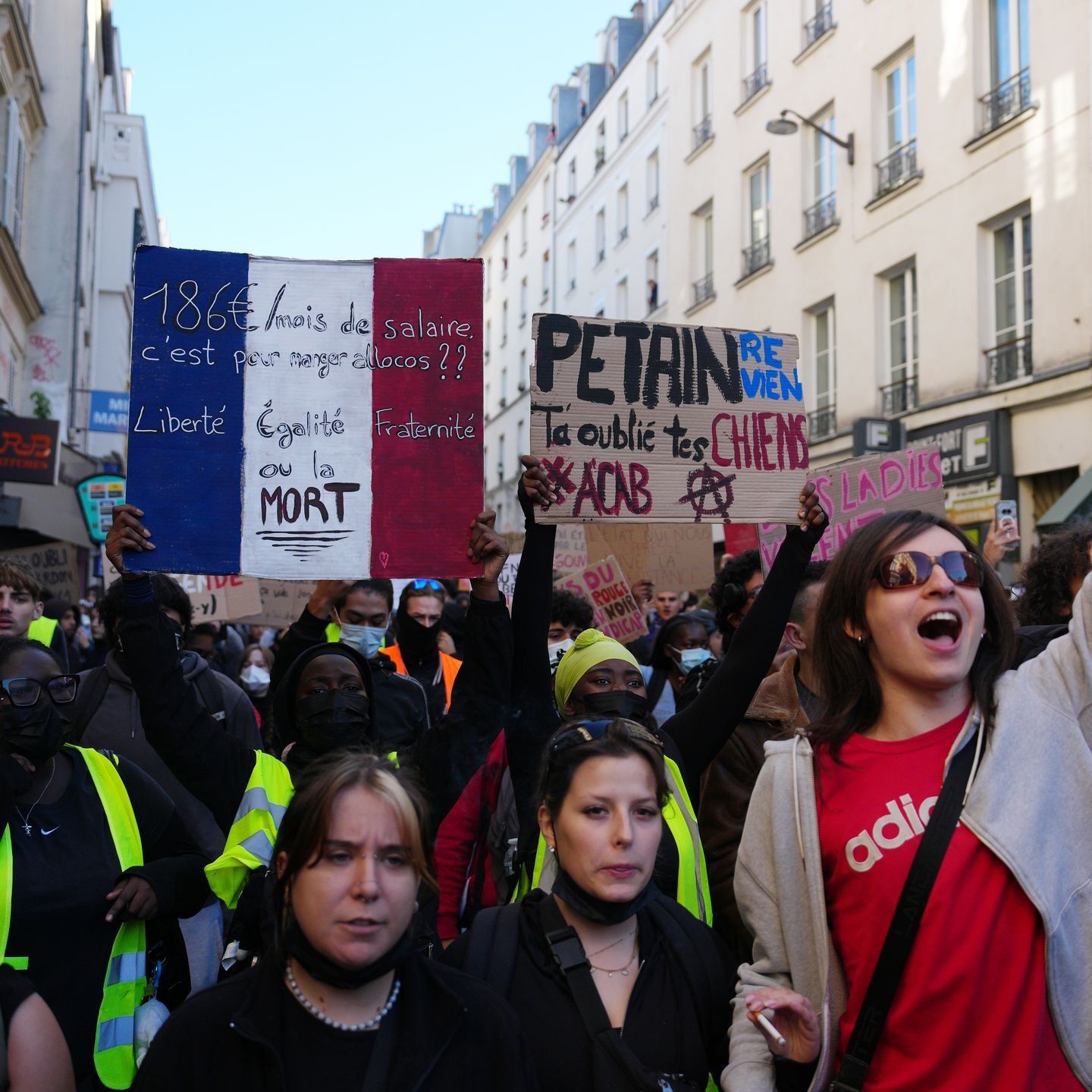

France is grappling with widespread unrest following nationwide demonstrations over rising living costs, concerns about the education system and growing dissatisfaction with public services.
The protests, which intensified on Saturday, October 17, brought together students, trade union supporters, activists and other demonstrators in several cities, including Paris, Marseille, Lyon and Bordeaux. What began as a series of student-led demonstrations gradually expanded into a broader expression of public frustration over economic hardship and social inequality.
According to reports by Reuters, Associated Press and other international media organisations, many demonstrators initially participated in peaceful marches. However, some gatherings later descended into clashes, looting, arson and the destruction of public and private property.
The demonstrations developed from student protests over inadequate school facilities, overcrowded classrooms, teacher shortages and concerns about educational resources. The movement subsequently attracted other groups dissatisfied with the rising cost of living and the state of public services.
The involvement of activists associated with France’s Yellow Vests movement has further broadened the demonstrations, bringing renewed attention to longstanding complaints about economic inequality and the financial pressures facing ordinary households.

Tensions escalated in several locations as police confronted groups involved in violent incidents. Security forces deployed crowd-control measures, including tear gas, to disperse some gatherings and restore order.
Reports also described burning vehicles, looted commercial premises and damage to public buildings. Limoges was among the affected cities after its historic town hall was set ablaze.
Reuters reported on Sunday that the unrest had resulted in one demonstrator’s death, injuries to hundreds of police officers and nearly 1,800 arrests. The reported figures underline the scale of the security challenge facing French authorities, although developments may continue to affect the final totals.
President Emmanuel Macron has condemned the violence and indicated that those responsible for criminal acts would be held accountable. Prime Minister Sébastien Lecornu and other officials have also faced pressure to respond to the unrest and address the underlying grievances.
The government’s response has generated further political debate, with competing views over public spending, policing methods, education policy and the appropriate balance between maintaining public order and protecting the right to peaceful protest.
The latest demonstrations have renewed scrutiny of France’s economic and social policies as the country approaches its next presidential election in 2027.
Although the protesters represent different interests, their participation reflects mounting concerns about living costs, public services and opportunities for younger generations.
For the French government, the immediate challenge is to restore calm, protect residents and businesses, and ensure that those responsible for violence face due process. In the longer term, addressing legitimate public concerns may prove essential to easing tensions and rebuilding confidence in public institutions.
As the situation develops, attention remains focused on the authorities’ next steps and whether dialogue and policy measures can prevent further escalation.