

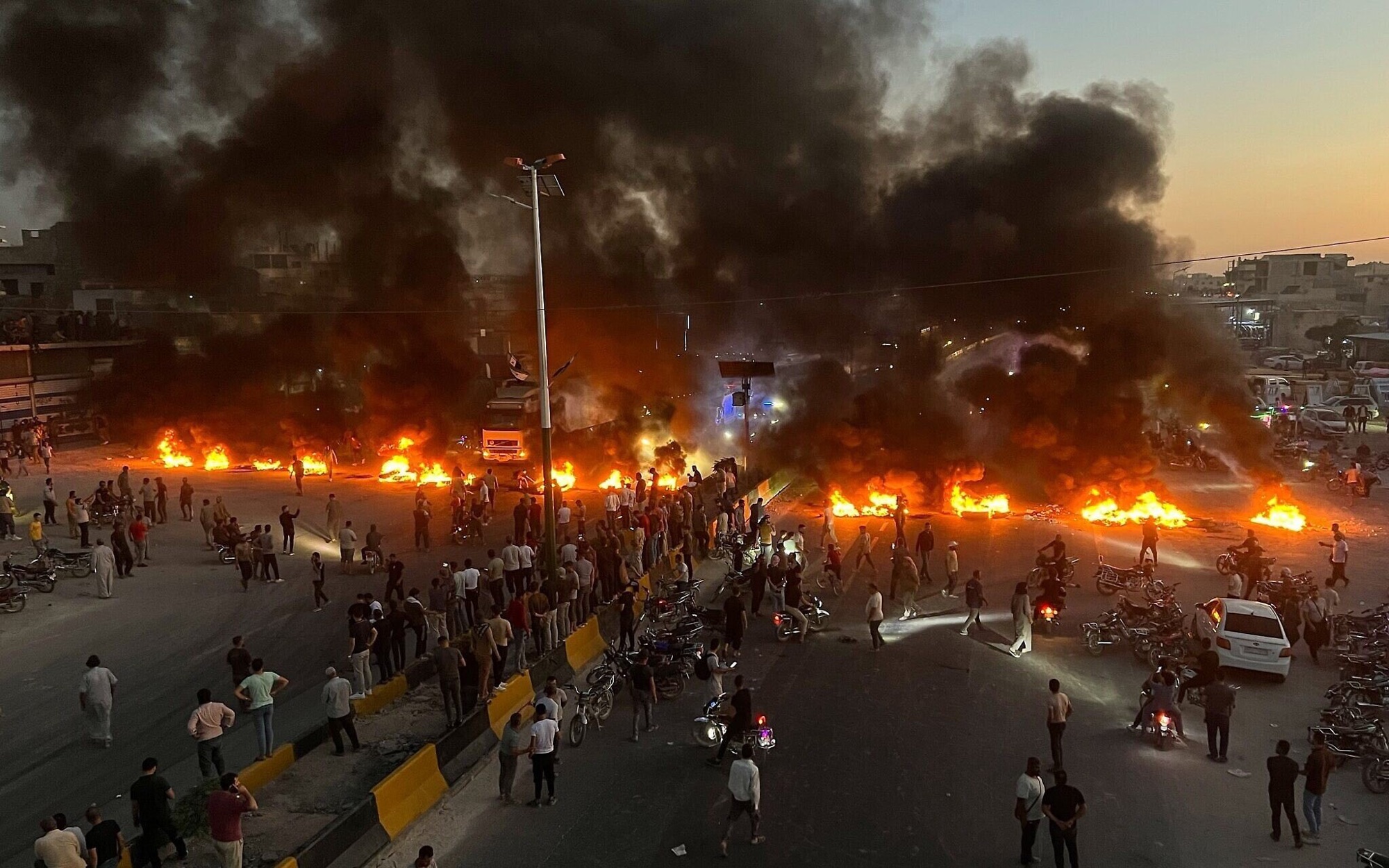
Protests broke out across multiple regions of Syria on Sunday evening and continued into Monday after the government announced a sharp overnight increase in fuel prices, marking the most widespread demonstrations since the fall of Bashar al-Assad’s regime nearly two years ago.
The Syrian Ministry of Energy raised the price of diesel by 40%, from 125 to 175 Syrian pounds (approximately $1.32) per litre. Gasoline prices also rose significantly — 95-octane by about 28% to 195 pounds and 90-octane by 26% to 185 pounds — while household and industrial gas prices increased by roughly 9%. Officials described the hikes as temporary measures driven by higher global procurement costs, disruptions linked to regional conflicts, and maintenance work at the Baniyas refinery, which has reduced domestic refining capacity.
Demonstrators responded by burning tyres, blocking major highways (including the key Damascus-Aleppo route and sections of the M4 highway in the northeast), and stopping crude oil tanker convoys headed for refineries. Protests were reported in Aleppo, Hama, Idlib, Hasakah, Raqqa, Deir ez-Zor, and other areas. Crowds gathered in streets and on roads at dusk and into the night, with thick black smoke rising from burning barriers amid vehicle headlights and motorcycle traffic. Some protesters called for the dismissal of the energy and economy ministers as well as the head of the Syrian Petroleum Company.
Syria produces only around 102,000 barrels of oil per day against domestic demand of roughly 325,000 barrels, relying heavily on imports. The price increases come amid ongoing economic hardship, with the vast majority of the population already living below the poverty line after years of conflict and successive cost-of-living pressures. Residents and drivers have warned that higher fuel costs will quickly push up prices for food, transport, and other essentials.
The demonstrations represent an early major public test for the post-Assad authorities as they attempt to stabilise the economy and rebuild infrastructure. The government has indicated it will continue reviewing prices in line with global market conditions and is working to expand refining and storage capacity over the longer term. As of Monday, protests and road blockades were continuing in several areas.