

Editorial

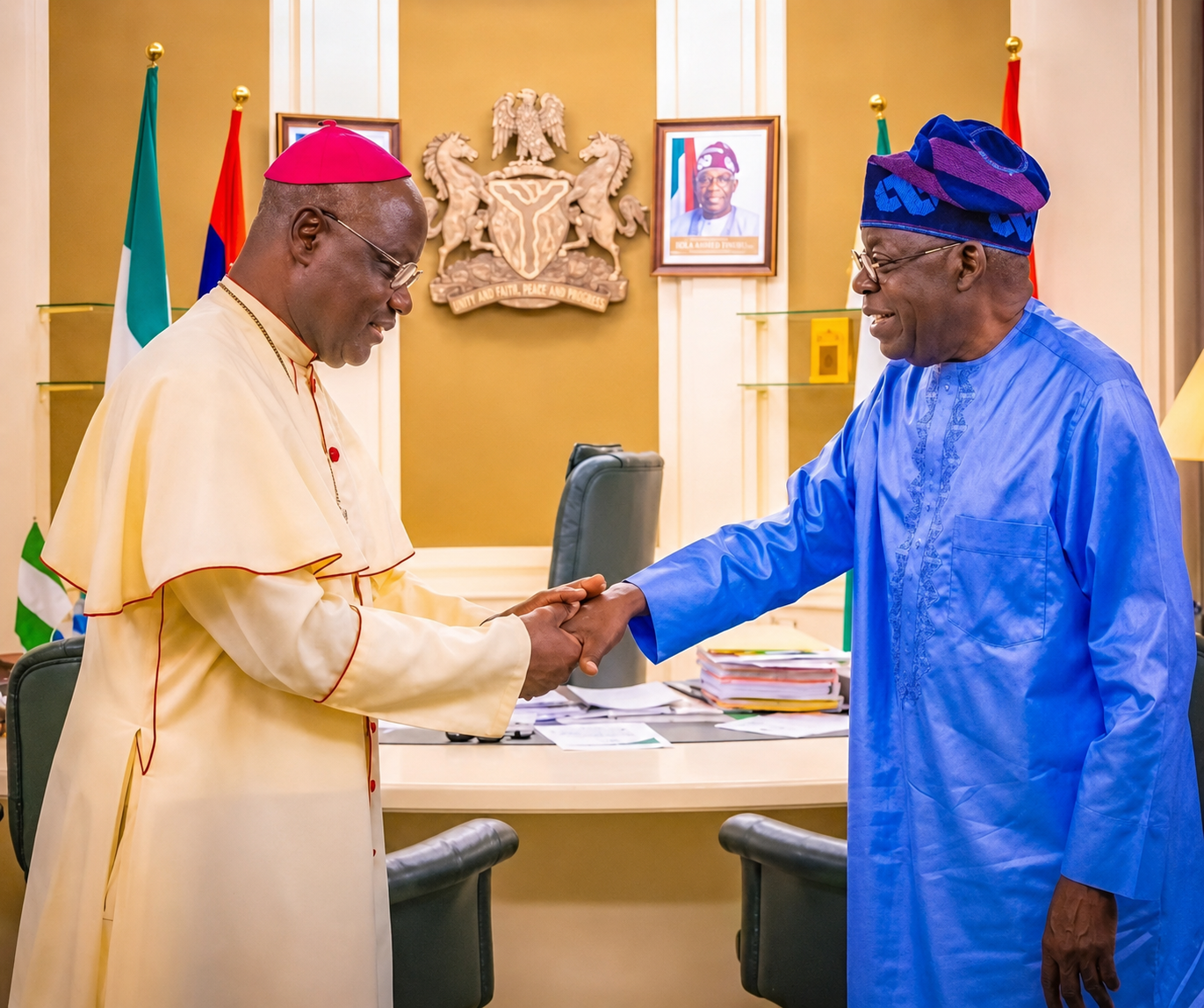
Democracy thrives when citizens and institutions can speak truth to power without fear of intimidation. Following President Bola Ahmed Tinubu and his aides’ criticism of the Catholic Bishops’ Conference of Nigeria over their statement during a recent meeting at the state house, where they discussed the issues—economy, insecurity, and political climate— plaguing the country, it has raised troubling questions about the government tolerance for opposing viewpoints.
President Bola Ahmed Tinubu, on 28 July, took issue with the representatives insisting that his administration was on the right track and that the clerics were not the sole custodians of truth on the state of the nation. The president took offence against the Archbishop Cardinal John Onaiyekan, for openly revealing in detail what was supposed to be a “closed-door” meeting, defining his speech as unbecoming and a violation of the discretion expected during high-level meetings. What then is democracy if the freedom of speech is considered a breach of confidentiality? But was the content of the meeting really supposed to be confidential when it directly affects over 250 million Nigerians?
In a statement made by the presidential aides, Temitope Ajayi and Daniel Bwala, on saturday, further reinforced Presidency’s position, asserting that the cleric’s speech reflected a one-sided perspective which was open to rebuttal. Daniel Bwala further suggested on his official X account, that the Bishop’s agenda goes in line with political interest rather than on religious concerns, while Ajayi maintained that the bishops failed to acknowledge the achievements of the Tinubu administration beyond the Nigerian Education Loan Fund (NELFund) and dismissed other reforms undertaken by the government.
However, these criticisms have raised mixed concerns among Nigerians. The former Deputy National Publicity Secretary of the All Progressives congress, Mr Timi Frank commended the Bishops for taking bold steps in confronting the president with the actual state of the country. According to him, Nigeria has not seen this kind of courage from religious leaders in Nigeria for a long time and that they were brave enough to look the president in the face and tell him the bitter truth.
Indeed, the iterative action of the Catholic Bishop deserves praise. Their willingness to confront the nations challenges demonstrates concern for the public. Nigeria has experienced, and continues to experience, worsening insecurity, ranging from kidnapping and terrorism to banditry and communal clashes. At the same time, soaring inflation and the rising cost of living have pushed millions of families into deeper impoverishment raising sobering questions about the effectiveness of the Nigerian government’s efforts to safeguard lives and property. We’ve had several insecurity issues ranging from the Chibok girls in 2014, the oyo abduction incident in May, 2026, the plateau and Benue communal clashes involving the Fulani headsmen, the aftermath which is nothing to write home about. These are the realities that confront Nigerians daily.
The call for effective leadership has gained momentum. But are we truly operating under a democratic system of government? This is a country where the fear of speaking the truth has become a bogeyman, discouraging citizens from freely expressing their views. It has caused many Nigerians to adapt to poverty as a result of prolonged exposure to economic hardship.
Ajayi mentioned that the Tinubu administration has ensured the regular payment of salaries and pensions. According to him, while this does not erase the discomfort many Nigerians still face, it is wrong to dismiss or ignore those improvements casually.
However, how can Nigerians be certain that these recent improvements are not part of a broader political strategy aimed at building public support ahead of the 2027 general election? While President Bola Ahmed Tinubu has undoubtedly introduced some economic reforms, the country’s sorry condition continues to overshadow their perceived benefits. The administration appears to be tackling the issue on the surface without addressing the root of Nigeria’s problem.This is merely cosmetic and offers no lasting solution. Millions of Nigerians continue to grapple with the high standard of living, poor electricity supply, lack of basic amenities, high cost of fuel prices and the list goes on.
Nigeria is a democratic state, and as such, should not frown on the public’s right of speech because it is through criticism that the incumbent government will know whether it is making progress or retrogressing. No administration is above scrutiny. The responsibility of a leader is not only within the purview of governing, but also in listening, communicating and addressing issues for the betterment of the people. They should not silence the views of the people as no country can function properly without an opposing party. We are not operating on an authoritarian system, and so, everyone has the right to condemn the actions of the government not doing well.
The Bishops have exercised their civic responsibility and the appropriate response is not condemnation but a mature response to addressing the raised issues. Intervention should not be viewed as an act of hostility but as a call for better governance. A confident government does not fear criticism; it welcomes it, and addresses the issue thereby gaining the public trust and confidence. Rather than condemning the bishops, the Presidency should focus its energy on addressing the issues they courageously brought to national attention.