

President demands stronger religious intervention as Onaiyekan’s criticism sparks debate
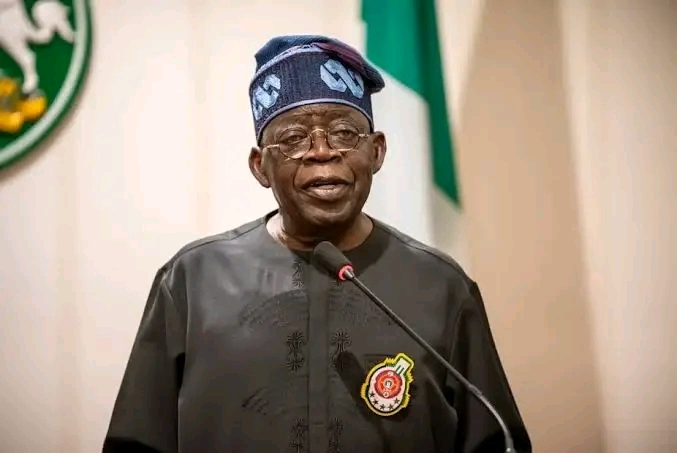
President Bola Tinubu has urged religious leaders across Nigeria to intensify their opposition to terrorism, kidnapping and banditry, warning against the use of religion to justify violence and lawlessness.
The President made the call on Sunday in Kano during the Grand Maulud of Sheikh Ahmad Al-Tijani, where he said religious institutions must deploy their influence to promote peace, justice, tolerance and responsible citizenship.
Tinubu’s message was delivered by the Secretary to the Government of the Federation, George Akume.
In a statement by the President’s media aide, Yomi Odunuga, Tinubu charged clerics to speak consistently against the killing of innocent Nigerians and the exploitation of religion for violent purposes.
“Your voices must be raised consistently against the murder of innocent people, against terrorism, kidnapping, banditry and the misuse of religion to justify cruelty,” the President said.
He also urged religious institutions and networks to strengthen peace education, religious literacy, scholarship and the moral development of young Nigerians.
The President said religious leaders should remind political leaders of their responsibilities to justice, compassion and good governance, while also teaching citizens that legitimate grievances could not justify violence.
“Above all, our spiritual fathers must continue to teach that no genuine service to Allah is advanced by destroying the innocent human life that Allah has made sacred,” he said.
Tinubu said the call was particularly important as the world grappled with violent extremism, terrorism, conflicts, food and climate shocks, transnational crime and the manipulation of religious and ethnic identities.
He cited a report of the United Nations High Commissioner for Refugees which put the number of forcibly displaced people worldwide at 117.8 million at the end of 2025.
The President described religious leaders as custodians of society’s conscience, saying they were uniquely positioned to heal wounds, resolve grievances and tackle hatred and bitterness.
He particularly tasked the Tijjaniyya community, whose networks stretch across West Africa, North Africa and other parts of the world, to deploy its influence in reconciliation, countering violent extremism, youth guidance and humanitarian intervention.
Tinubu said the Federal Government recognised the importance of religious and traditional leaders in promoting tolerance, combating misinformation and identity-based divisions, and strengthening grassroots peacebuilding.
He also reaffirmed Nigeria’s commitment to regional cooperation, counter-terrorism, maritime security, economic integration and dialogue.
According to him, Nigeria’s strategic position linking West Africa, the Sahel, the Lake Chad Basin, the Gulf of Guinea and the wider Atlantic region meant that instability in the country could have consequences beyond its borders.
“Our position means that peace in Nigeria has consequences far beyond Nigeria,” Tinubu said.
He added that religious communities with transnational networks, particularly the Tijjaniyya, could complement government and regional efforts to build an architecture of social peace.
The President assured Nigerians that his administration would continue to protect freedom of worship while working with religious and traditional institutions to promote peace, mutual respect and national cohesion.
Tinubu also welcomed the World Khalifa of the Tijjaniyya Order and other Islamic scholars and spiritual leaders who travelled from Algeria, Morocco, Senegal, Egypt and other countries for the Maulud.
He paid tribute to the late Sheikh Dahiru Usman Bauchi, who died in November 2025, describing him as “a teacher, a father and a voice of moderation and reason, and as an advocate of peace and piety.”
The President said the best way to honour the late scholar would be to preserve his legacy of Qur’anic scholarship, moral instruction, devotion, learning and peaceful coexistence.
He commended the Supreme Council of the Tijjaniyya, Sheikh Dahiru Usman Bauchi Foundation, Kano State Government, traditional rulers, scholars, security agencies, emergency services, organisers and volunteers for their roles in the event.
Onaiyekan’s criticism
Tinubu’s appeal came amid renewed controversy over the role of religious leaders in Nigeria’s governance and politics.
On July 28, the Catholic Bishops’ Conference of Nigeria, led by Archbishop Matthew Ndagoso, met with the President and raised concerns over the country’s security and economic situation.
Speaking after the meeting, former Catholic Archbishop of Abuja, John Cardinal Onaiyekan, said some people around Tinubu were presenting the President with a “rosy picture” of the situation in the country.
Onaiyekan also warned that the government appeared determined to win future elections “by all means.”
His comments triggered a fresh political debate, with some Presidency and Federal Government officials accusing the cleric of partisanship.
The controversy has since renewed calls for religious leaders to balance their spiritual responsibilities with their constitutional and moral obligations to speak out on issues affecting Nigerians.