

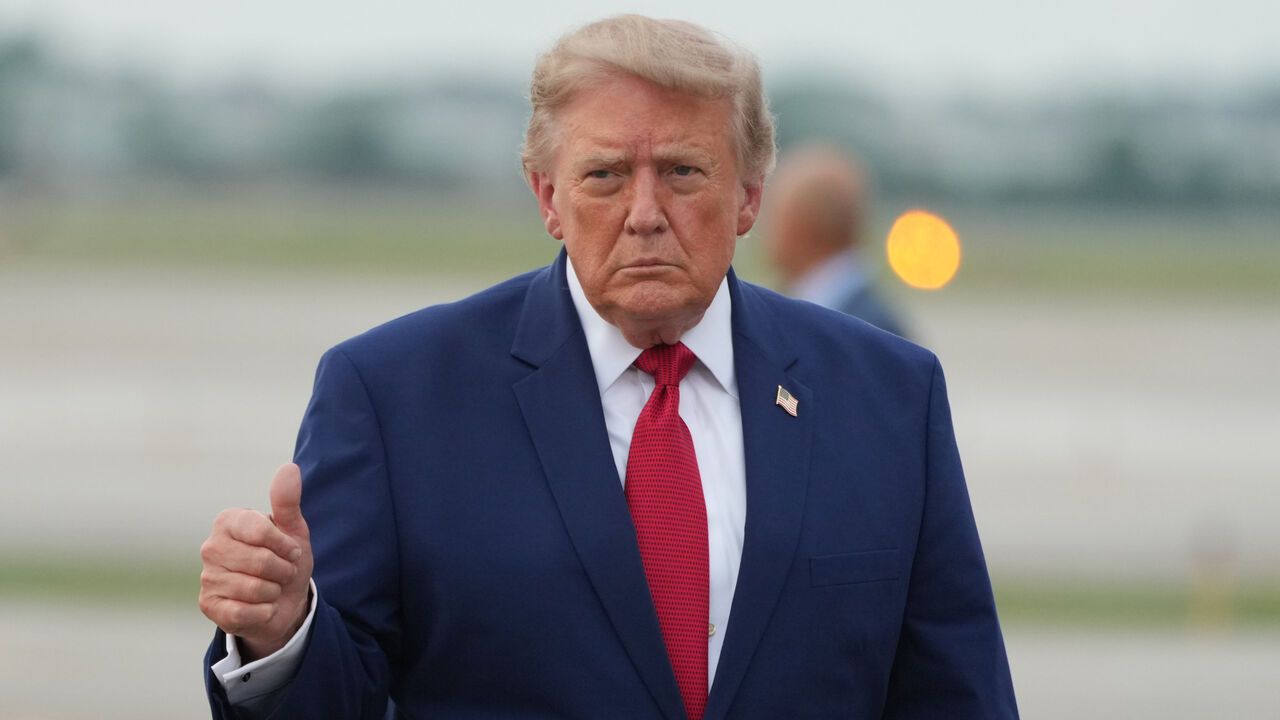
WASHINGTON, United States — US President Donald Trump has warned that Oman could face military action if its efforts to negotiate with Iran over the reopening of the Strait of Hormuz are seen as obstructing Washington’s objectives.
Trump made the remarks during a phone interview with Fox News correspondent Trey Yingst on Monday, as separate discussions between Iran and Oman continued over arrangements for shipping through the strategically important waterway.
The warning followed an announcement by Iran that it had reached an understanding with Oman on a proposed route for vessels seeking to transit the Strait of Hormuz. Iranian Foreign Ministry spokesman Esmaeil Baghaei stated that the two countries had agreed on the broad outline of a transit map, with further details expected to be finalised before a joint announcement.
The Strait of Hormuz, which lies between Iran and Oman, is one of the world’s most important maritime energy corridors. Before the current conflict disrupted shipping, roughly one-fifth of global oil and liquefied natural gas supplies moved through the waterway.
Oman has maintained a position of neutrality in the conflict and has played a longstanding role as an intermediary between Iran and Western governments. The Gulf state has nevertheless found itself increasingly caught up in the escalating regional tensions.
Trump also claimed that Washington had established a direct communication channel with Iran’s Islamic Revolutionary Guard Corps. An IRGC spokesman, however, rejected the assertion, saying the organisation was not engaged in discussions with US officials.
The latest confrontation coincides with the expiration of a 60-day US-Iran memorandum intended to provide a framework for negotiations and support a cessation of hostilities. The arrangement, reached in June, covered issues including Iran’s nuclear programme and efforts to restore navigation through the Strait of Hormuz.
The understanding subsequently deteriorated after military action resumed. Trump later declared the ceasefire effectively over, while Iranian officials described the arrangement as suspended.
Tehran has also linked the full restoration of commercial traffic through the strait to compensation from Washington for what it regards as breaches of the agreement. Earlier reports indicated that Iran was considering charges equivalent to between five and seven per cent of cargo values for vessels using the waterway.
Trump, meanwhile, said he was under no immediate pressure to end the conflict and again called on Iran to surrender. He also reiterated that preventing Tehran from acquiring a nuclear weapon remains a central objective of his administration. (Reuters)
The continuing dispute has heightened uncertainty for international shipping and energy markets. With commercial traffic through the Strait of Hormuz severely reduced, further deterioration in US-Iran relations could deepen concerns over global oil and gas supplies.
The outcome of the stalled diplomatic efforts — including Oman’s mediation and negotiations between Washington and Tehran — is expected to play a major role in determining whether normal shipping operations can eventually resume through the vital waterway.