

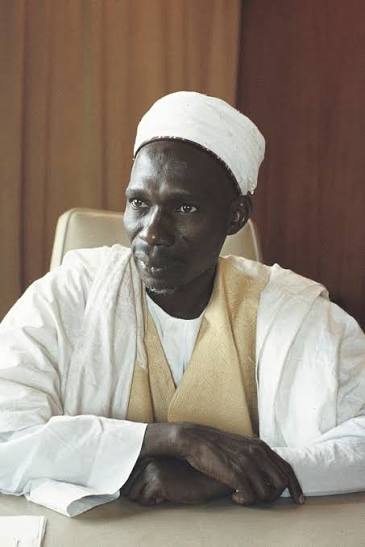
August 30, 1957, occupies an important place in Nigeria’s political history as the day Alhaji Abubakar Tafawa Balewa was appointed the first Prime Minister of the Federation of Nigeria, marking a major constitutional step in the country’s journey towards self-government and eventual independence.
The appointment followed constitutional reforms agreed during the 1957 Constitutional Conference in London, which introduced significant changes to Nigeria’s system of government. The amendments came into force on August 30, 1957, and formally created the office of Prime Minister of the Federation.
How Balewa emerged
Balewa was a prominent member of the Northern People’s Congress (NPC) and had previously served as Nigeria’s Minister of Transport. He was also a member of the Federal House of Representatives representing Bauchi South-West.
Following the constitutional changes, Nigeria’s Governor-General, Sir James Wilson Robertson, appointed Balewa to head the federal government. The United Nations historical record on Nigeria’s constitutional development confirms that the existing Council of Ministers was dissolved on August 30, 1957, after which Balewa was appointed the first Prime Minister of the Federation.
His appointment was particularly significant because it placed a Nigerian politician at the head of the federal executive at a crucial stage of the country’s transition from British colonial rule to self-government.
An all-Nigerian government
One of Balewa’s immediate challenges was governing a country divided into three powerful regions — the Northern, Western and Eastern regions — each dominated by major political parties with different political interests.
Rather than forming an exclusively NPC government, Balewa established a broad-based National Government. His first cabinet included politicians drawn from different political parties and regions. Among those who served were K.O. Mbadiwe, Samuel Ladoke Akintola, Festus Okotie-Eboh, Ayo Rosiji, Raymond Njoku, gwe Aja-Nwachukwu and Kola Balogun.
The arrangement reflected the political necessity of maintaining cooperation among Nigeria’s competing regional interests at a time when the country was negotiating the final stages of decolonisation.
Balewa and Nigeria’s independence
Although August 30, 1957, is often described as the date Balewa became Nigeria’s first Prime Minister, there is an important constitutional distinction.
From August 30, 1957, until October 1, 1960, Balewa served as Chief Minister/Prime Minister-designate and head of the federal government under the colonial constitutional arrangement. On October 1, 1960, when Nigeria achieved independence, he continued in office as the country’s Prime Minister.
Therefore, Balewa was both the first head of Nigeria’s federal government under the new 1957 constitutional arrangement** and, following independence, Nigeria’s first and only Prime Minister as an independent country.
His government was based on the Westminster parliamentary system. At independence, Nigeria remained a constitutional monarchy within the Commonwealth, with Queen Elizabeth II as head of state and Balewa as head of government. This arrangement changed in 1963 when Nigeria became a republic and Dr Nnamdi Azikiwe became President.
A key figure in the independence struggle
Balewa’s rise to the premiership came during one of the most important periods in Nigeria’s history. The country had been moving gradually towards greater internal self-government following constitutional developments in the 1950s.
The 1957 constitutional reforms represented a significant transfer of executive responsibility to Nigerian political leaders. The United Nations historical record notes that the amendments altered the composition and powers of the federal executive and legislative institutions and established the office of Prime Minister.
Balewa subsequently became one of the central figures in negotiations surrounding Nigeria’s independence. In 1959, federal elections were held, and the NPC emerged with the largest number of seats. The NPC subsequently formed a coalition with the National Council of Nigeria and the Cameroons (NCNC), while Balewa retained the premiership.
On October 1, 1960, he became Prime Minister of an independent Nigeria.
His famous independence speech
At independence, Balewa delivered a historic address in Lagos in which he spoke about the responsibilities that came with freedom and the need for Nigerians to work together despite their differences.
His tenure was characterised by efforts to preserve Nigeria’s unity while balancing powerful regional and political interests. His foreign policy also sought to establish Nigeria as an important African state while maintaining close relations with Britain and other Western countries.
The end of his political career
Balewa remained Prime Minister until January 15, 1966, when Nigeria’s First Republic was overthrown in a military coup.
He was abducted during the coup and was subsequently killed. His death marked the end of Nigeria’s First Republic and the beginning of a prolonged period of military rule.
He remains one of the most prominent political figures of Nigeria’s independence era. Indeed, Balewa holds the unique distinction of being Nigeria’s first and only Prime Minister, as the office was abolished following the 1966 military takeover and subsequent constitutional changes.
Why August 30 matters
August 30, 1957, was therefore more than the appointment of an individual to political office. It represented a significant milestone in Nigeria’s transition from colonial administration towards self-rule.
Sixty-nine years ago today, Balewa’s appointment placed a Nigerian at the centre of the federal executive for the first time under the new constitutional order. Three years later, that transition culminated in Nigeria’s independence on October 1, 1960.
Today in history, August 30, 1957 — Abubakar Tafawa Balewa became the first Prime Minister of the Federation of Nigeria, beginning a historic chapter that would lead Nigeria to independence three years later.