

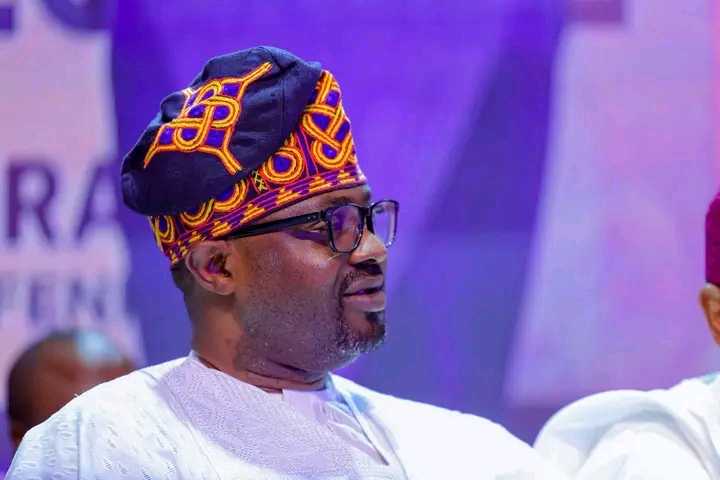
Minister of Interior, Olubunmi Tunji-Ojo, has faulted former Vice President Atiku Abubakar’s claim that he would reopen Nigeria’s land borders if elected president in 2027, insisting that the country’s borders are not currently closed.
Tunji-Ojo, in a statement issued on Saturday, said the claim required clarification because the Nigeria Immigration Service, which oversees border and migration management, operates under his ministry.
According to the minister, several major land borders previously affected by closures have since been reopened, making the promise to “reopen” Nigeria’s borders inaccurate.
He recalled that on December 16, 2020, the previous administration reopened the Seme, Illela, Maigatari and Mfum borders, with other crossings subsequently following.
He added that Idiroko and Ikom were reopened for goods and services on April 20, 2022, while Kamba and Tsamiya in Kebbi State were reopened under the current administration in February 2026, linking Nigeria with Niger Republic and Benin Republic respectively.
Tunji-Ojo also addressed Atiku’s reference to Nigeria’s borders with Cameroon, Chad, Niger and Benin Republic, explaining that some border closures were driven by security concerns rather than trade restrictions.
He said the prolonged closure of the Banki and Amchidé crossings along the Cameroon border began in 2014 because of Boko Haram insurgency and was therefore unrelated to the 2019 trade policy.
According to him, the crossings were reopened in 2019, while Fotokol and Gambaru subsequently followed in 2021 after joint military and stabilisation efforts involving Nigeria, Cameroon, Niger and Chad.
The minister argued that conflating the security-driven closures with the 2019 trade policy created a misleading impression that all the border restrictions were part of a single, continuous shutdown.
“Folding this separate, security-driven history into one continuous 2019 shutdown misrepresents two distinct issues, trade regulation and counter-insurgency, as a single failure,” he said.
Tunji-Ojo, however, acknowledged that not every northern border crossing is currently operating without restrictions, stressing that tighter controls remain necessary in areas where banditry or residual insurgent activities persist.
He said such restrictions were deliberate security measures designed to protect traders and border communities rather than evidence of government neglect.
“Reopening ahead of the security situation would expose traders and border communities to greater risk,” the minister stated.
He further argued that modern border management should not be reduced to a choice between complete closure and unrestricted movement, noting that effective management requires a combination of security, proper documentation, customs compliance and controlled trade facilitation.
The minister urged political actors to provide specific details of their proposed border policies rather than presenting separate trade, security and infrastructure challenges as a single issue.
“Political competition should not become a competition to rewrite recent history,” Tunji-Ojo said.
“If he has a new border proposal, he should set it out and explain how it differs from the current approach, rather than treating separate trade, security and infrastructure issues as one and the same.”
The minister’s statement comes as political parties and presidential hopefuls begin positioning themselves ahead of the 2027 general elections, with economic policies, border management and regional trade expected to feature prominently in the political debate.