

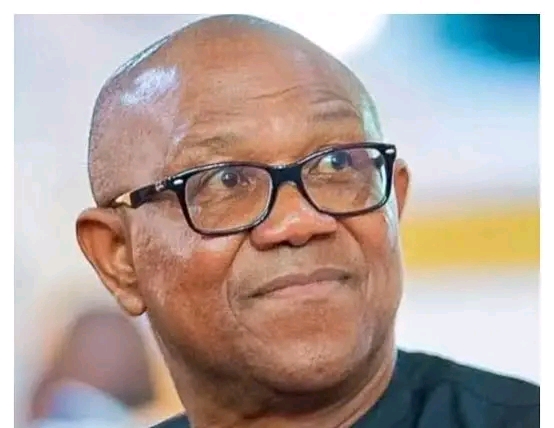
Former Anambra governor questions Tinubu’s leadership style, criticises foreign holidays and rejects return to petrol subsidy
Former Anambra State governor and 2027 presidential hopeful, Peter Obi, has said Nigerians will approach the next presidential election differently, arguing that lessons from the 2023 poll have made voters more conscious of the need to protect their votes.
Obi made the remarks while speaking on Nigeria’s political and economic challenges, as he continued to outline his position ahead of the 2027 general election.
Reflecting on the 2023 presidential election, Obi said he and his supporters had placed considerable confidence in the electoral process and believed assurances from the Independent National Electoral Commission (INEC). He maintained that such an approach would not be repeated in the next election.
The 2023 election was won by President Bola Ahmed Tinubu of the All Progressives Congress, while Obi finished third behind Atiku Abubakar of the Peoples Democratic Party. Both Obi and Atiku challenged the result in court, but the presidential election petition tribunal and subsequently the Supreme Court upheld Tinubu’s victory.
Obi also criticised what he described as a lack of sufficient presidential presence across the country, particularly in states affected by insecurity.
He questioned the President’s foreign travels and argued that the leadership of a country facing serious security challenges should maintain a stronger physical presence among affected communities.
Obi has previously made similar claims about Tinubu’s domestic travels. However, a Daily Trust fact-check in 2025 found the broader claim that Tinubu had never spent a night in any Nigerian state outside Lagos to be false, noting that the President had spent a night in at least one other state.
The former governor contrasted Tinubu’s travels with his own approach to emergencies while serving in Anambra, saying leaders should personally identify with citizens during periods of crisis.
He argued that Nigerians in areas affected by violence require visible leadership and decisive government action rather than assurances from a distance.
On security, Obi said any administration under his leadership would treat the protection of lives and property as a central responsibility of government.
He has repeatedly identified security, education and poverty reduction among his priorities, alongside reducing the cost of governance and fighting corruption. In discussing his 2027 agenda, he said restoring stability would require stronger institutions and a more accountable style of leadership.
His comments come amid continuing national debate over the government’s handling of insecurity, particularly attacks and killings in parts of the North and Middle Belt.
On the controversial petrol subsidy policy, Obi maintained that he does not support returning to the old subsidy regime.
His position places him apart from politicians advocating a reversal of the policy. At the 2026 Nigerian Bar Association conference in Port Harcourt, Obi argued that the removal of the subsidy itself was not the fundamental problem; rather, he criticised the management of the savings generated from the policy.
He has maintained that subsidy removal should be accompanied by transparent use of the resulting funds and measures capable of reducing the burden on Nigerians.
The subsidy debate has become an increasingly prominent issue ahead of the 2027 election, with opposition figures offering different proposals on whether the policy should be retained, modified or reversed.
For Obi, the broader argument is that Nigeria needs a government capable of managing public resources transparently while directing savings towards productive sectors and measures that improve citizens’ welfare.
As political activities gradually intensify ahead of 2027, Obi’s comments indicate that electoral credibility, national security, leadership visibility and economic management are likely to remain major themes in his campaign.