

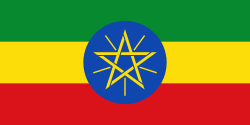
Ethiopia has ushered in the year 2019 under its traditional calendar, even as much of the world operates in 2026, highlighting the country’s continued use of one of Africa’s distinctive calendar systems.
The New Year, known as Enkutatash, was celebrated on Friday, September 11, 2026, marking the first day of the Ethiopian calendar year 2019. The celebration is observed as a national holiday and is traditionally associated with the end of the rainy season and the beginning of a new cycle.
Unlike the Gregorian calendar, the Ethiopian calendar has 13 months — 12 months of 30 days each and a short 13th month containing five or six days. Its year numbering is also several years behind the Gregorian system because the two calendars use different calculations for determining the date of the birth of Christ.
The apparent difference in dates has attracted renewed attention online, with social media users expressing fascination that Ethiopia can officially be in 2019 while countries using the Gregorian calendar are in 2026.
However, the calendar difference should not be interpreted as evidence that Ethiopia is technologically or economically behind other countries. The country has continued to pursue major infrastructure, economic and technological projects despite retaining its traditional calendar.
The World Bank has noted that Ethiopia’s development efforts have contributed to major improvements in infrastructure and living standards, including expanded access to potable water and electricity. The institution, however, has also highlighted challenges involving debt, private investment and economic reforms.
Ethiopia has also recorded significant economic activity in recent years. In February 2026, Prime Minister Abiy Ahmed said the country’s economy was projected to grow by 10.2 per cent during the 2025/26 fiscal year.
The country’s telecommunications sector is another area experiencing expansion. Ethio Telecom projected a 36.7 per cent increase in revenue for the 2026/27 financial year, while Ethiopia continues to pursue large-scale aviation and transport infrastructure projects.
The World Bank in June 2026 also unveiled a new country partnership framework for Ethiopia focused heavily on job creation, noting that more than two million Ethiopians enter the labour market each year.
Thus, while Ethiopia’s calendar may read 2019, its development story is firmly rooted in the present. The country’s decision to preserve its own calendar represents a cultural and historical choice rather than a measure of its position in the modern world.
As Ethiopians celebrate Enkutatash, the occasion offers a reminder that different societies can retain distinctive traditions while simultaneously pursuing economic growth, infrastructure development and technological advancement.
Happy New Year, Ethiopia — 2019 Ethiopian Calendar.